

MJB EMKL - Container Logistics Operations
Mobile logistics operations app for container distribution and field documentation.
01 / Overview
02 / Problem & Solution
The Challenge
Container distribution activities required operational teams to manage multiple pieces of shipment and container information during daily field operations. Manual documentation could make records difficult to organize, increase the risk of incomplete or inaccurate data, and limit management visibility into ongoing container movements. Field operators also needed a practical way to record shipment information while performing operational activities.
The Engineering Solution
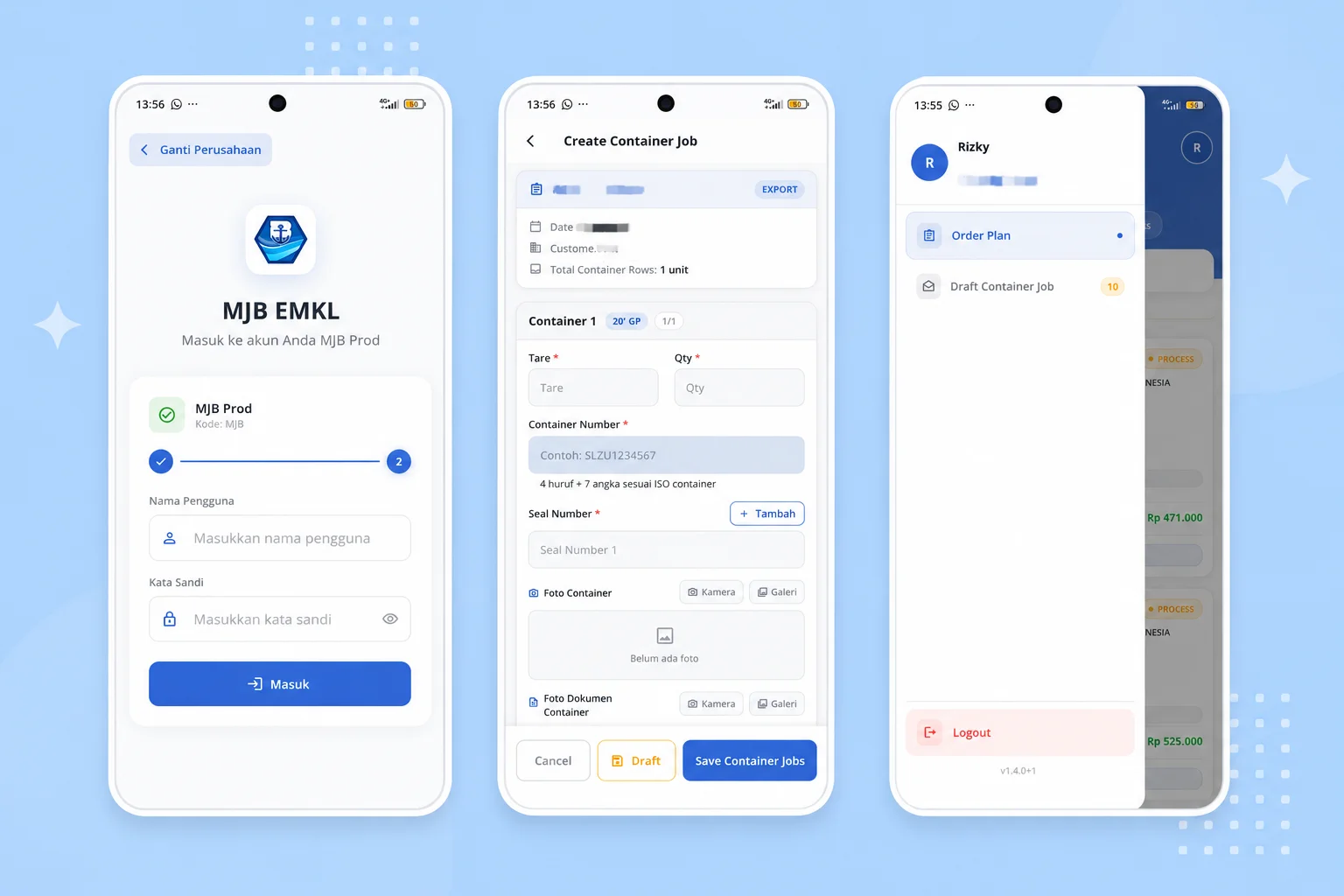
Developed a mobile logistics operations application that centralizes container distribution records and supporting documentation. Implemented structured input flows for container numbers, delivery orders, container documents, and other operational data. Designed the application around field usage so operators can record logistics activities directly from their mobile devices and provide structured information that can be monitored by management.
03 / Architecture & Implementation
04 / My Responsibilities
- ▹ Developed cross-platform mobile features using Flutter
- ▹ Implemented container distribution and logistics data entry flows
- ▹ Developed features for recording container numbers, delivery orders, and supporting documents
- ▹ Integrated RESTful APIs for logistics and operational data
- ▹ Implemented state management and maintained application architecture
- ▹ Handled UI implementation, API integration, testing, debugging, and application release.
05 / Challenges & Business Outcomes
Technical Obstacles
Designing efficient data-entry flows for field operators who need to record logistics information quickly; Maintaining data consistency across container and shipment records; Handling multiple types of operational documentation in a structured workflow; Providing a simple mobile experience for day-to-day field operations.
Measurable Impact
Digitized container distribution and logistics documentation in a centralized mobile workflow. Reduced dependency on manual operational records, improved consistency of container and shipment information, and provided management with better visibility into field logistics activities.